
Taking shelter in the open
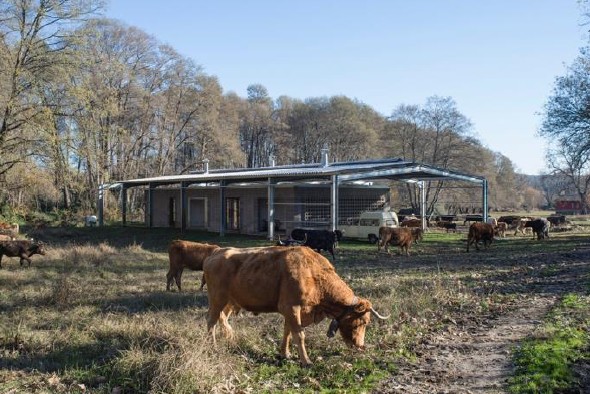
A garden, a cave, and a shed — Three exposed interiors
DOI:
https://doi.org/10.64197/REIA.27.1022Keywords:
process, exposure, waiting, shelter, slowness, landscape, materiality, inhabiting, time, continuityAbstract
To build not to enclose, but to let time, air, and life pass through the work. This article reflects on an architecture open to its surroundings and attentive to its becoming: an architecture that offers itself as a shelter without interior, one that does not defend itself from the outside but incorporates it, recognizing in the process its true material.
The projects explored here of the architect Arturo Franco —a garden, a cave, and a shed— do not seek to be finished, but to remain in balance with what affects them: the climate, bodies, nature, and hands. They are places where things are still happening.
To take shelter in the open does not mean to expose oneself to the world, but to accept that building is a form of coexistence with it. In that tension —between protection and exposure, between what rises and what is left to be— unfolds a way of working, an ethic of process. When design embraces the open air, architecture becomes a form of refuge: not one that protects from the outside, but one that allows us to remain within it.
Downloads
Published
How to Cite
Issue
Section
License
Copyright (c) 2026 BELEN RAMOS JIMÉNEZ, ARTURO FRANCO DÍAZ

This work is licensed under a Creative Commons Attribution 4.0 International License.