
Shared Spaces: Redescribing the Gradient Between the Public and the Private
DOI:
https://doi.org/10.64197/REIA.27.1034Keywords:
shared space, public–private gradient, research by design, experimental teaching, contemporary architectureAbstract
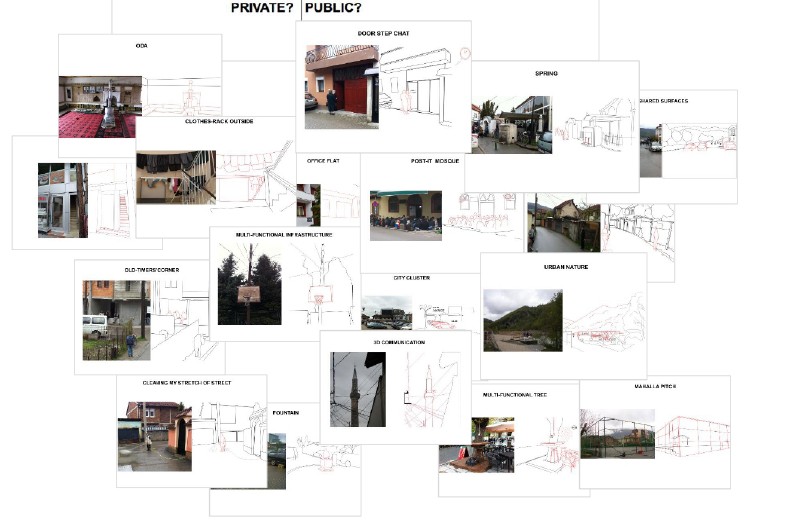
Contemporary architecture increasingly struggles with the limitations of binary categories such as public and private to describe and design current modes of inhabitation. This article proposes the public–private gradient as a conceptual and projective tool capable of addressing the spatial, social and cultural complexity of shared spaces. The research is based on a series of international architecture workshops conducted from 2006 onwards, understood not merely as pedagogical experiences but as an empirical research device. Through a methodology combining redescription, analytical visualization and projective experimentation, the workshops enabled the observation and comparison of how the gradient is articulated and negotiated across diverse urban and cultural contexts. The transversal analysis of the empirical material shows that shared space is defined less by geometry than by the interaction of form, use, time, contracts and social codes. The article discusses the value of the architectural workshop as a form of research by design and positions the gradient as an operative framework for designing spatial transitions beyond inherited rigid boundaries.
Downloads
Downloads
Published
Versions
- 2026-03-13 (2)
- 2026-02-19 (1)
How to Cite
Issue
Section
License
Copyright (c) 2026 Carlos Arroyo Zapatero

This work is licensed under a Creative Commons Attribution 4.0 International License.