
The Presence of Absence
Depth of Field in the Shino House
DOI:
https://doi.org/10.64197/REIA.27.1021Keywords:
Kazuo Shinohara, precision, Shino House, interiority, transversality, abstractionAbstract
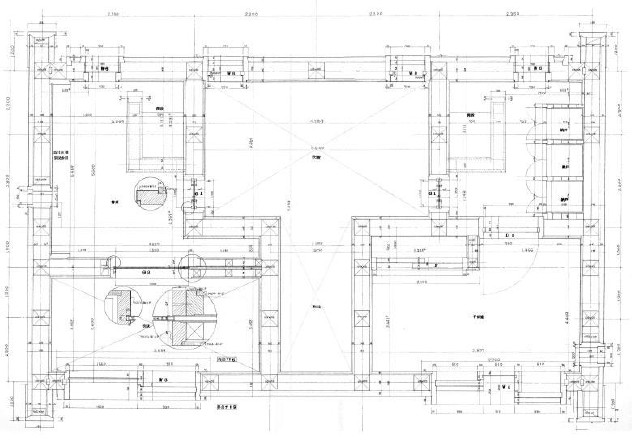
The text offers a fragmentary reflection on the architecture of Kazuo Shinohara’s second period, focusing on the Shino House (1970) and its relationship with other contemporary works such as The Uncompleted House and Sky Rectangle. Drawing from the direct experience of visiting the Shino House, it examines the radical nature of its central space, conceived as a sacred, immobile, and autonomous void, in contrast with the dynamic, almost urban spaces of other houses from the same period. The article links the notion of “impresence,” borrowed from José Ángel Valente, with the inorganic, dry, and abstract quality of Shinohara’s interior space, where sacredness emerges from formal purity and the absence of function. This void is understood as the spatial crystallization of suspended time, opposed to the duration and movement of everyday experience. The analysis extends to the works of the first period, showing the transition from spaces with natural and symbolic elements toward an interiorized and abstract architecture. Finally, the text adopts the structure of a poetic epilogue, in which architecture is interpreted as a place of passage between interior and exterior, presence and absence, silence and matter—proposing a transversal reading between architecture and Valente’s poetics.
Downloads
Downloads
Published
Versions
- 2026-03-16 (2)
- 2026-02-19 (1)
How to Cite
Issue
Section
License
Copyright (c) 2026 Laura Pérez Lupi

This work is licensed under a Creative Commons Attribution 4.0 International License.